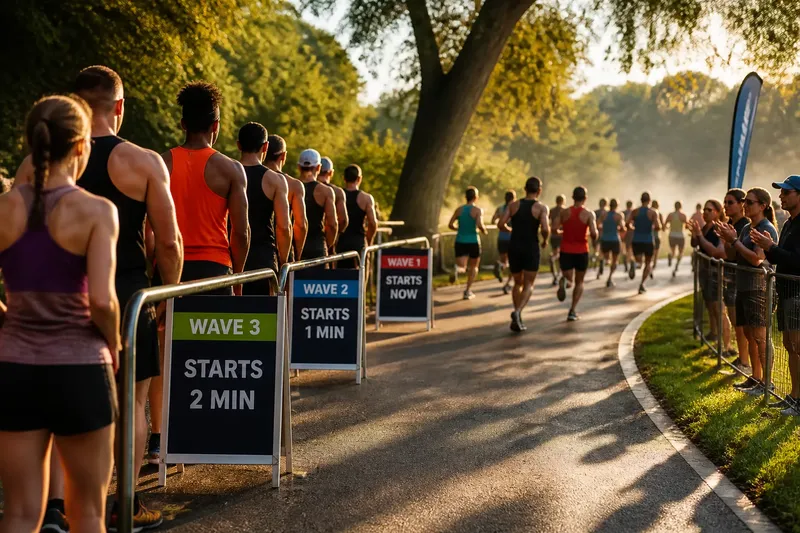
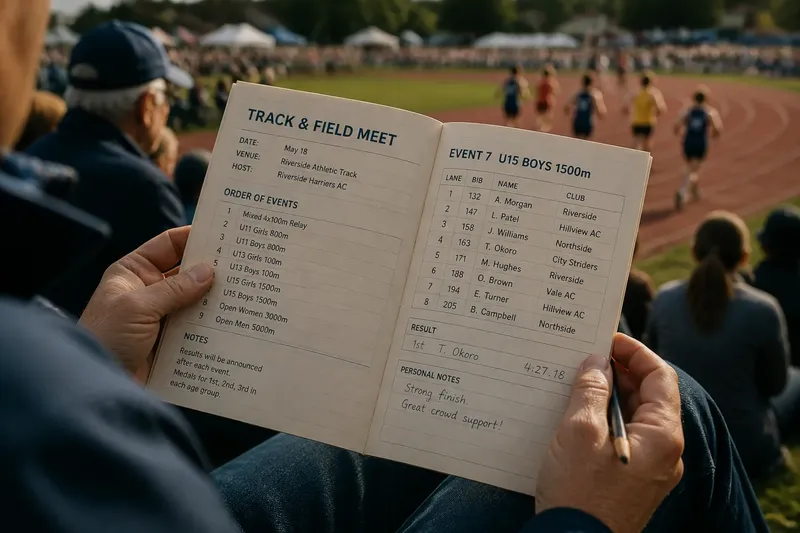
How to Choose a Viewpoint for Your First Race Day
Choose a viewpoint for your first race day with a simple checklist that helps you read the course, follow the field, and decide when to move.
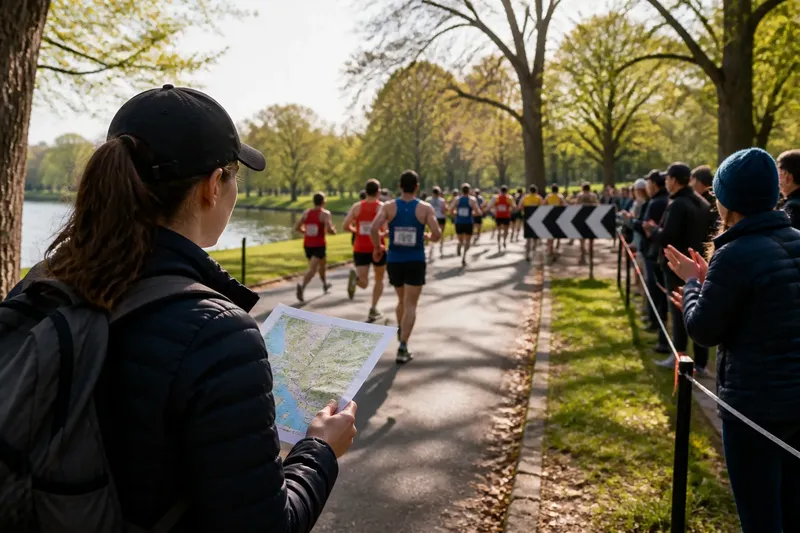
You arrive at a park race as the first runners gather near the start, and a marshal points spectators toward an open path. For your first race day, a viewpoint checklist helps you choose where to stand, what to watch, and whether another spot is worth the walk.
Pick a viewing goal
Decide what part of the event interests you most. The start offers the gathering and launch; a straight section lets you watch groups pass; a finish area reveals the closing effort and exchanges between runners and spectators.
There is no universally best spot. A bend can make changes in spacing easier to see, while a long straight keeps runners in view. Choose an authorized public area where you can see the course without standing in a narrow passage or blocking anyone.
Check the course map
Before settling in, use the event map to locate the start, finish, spectator areas, crossings, and any restricted sections. You do not need to memorize the route; identify a permitted place that matches your viewing goal.
Pick a landmark you can recognize, such as a bridge, a painted line, or a distinctive building. It gives you a clear reference as runners approach and helps you describe your location to a companion without relying on a phone screen.
Use this viewpoint checklist
Check each item against the map and the scene around you. If an item does not fit, use its alternative rather than forcing a poor or unauthorized viewing spot.
- Course access: Check that event signs or staff identify the area as open to spectators; if it is restricted, choose a signed viewing area instead.
- Line of sight: Check whether you can see runners approach or pass without a wall, crowd, or sharp obstruction blocking the view; if not, shift to a nearby permitted opening.
- Room to stand: Check whether spectators can stand without squeezing into a narrow path; if the space is crowded, use a wider authorized area.
- Viewing goal: Check whether the spot shows the start, a turn, a straight, or the finish you came to see; if it does not, compare the map with another permitted location.
- Route crossings: Check whether your position or planned route would interfere with a crossing; if it would, stay put or use the event’s designated spectator route.
- Landmark: Check that you can identify a visible feature to help you relocate or meet a companion; if no feature stands out, choose a location near a clear sign or building.
- Event updates: Check announcements or staff directions for delays and course changes; if guidance changes, follow the new instructions instead of relying on the old map.
Read the passing field
Once you have a spot, notice how the event is moving before the runners arrive. Listen for announcements, watch where spectators are standing, and look for marshals directing movement.
As runners pass, watch patterns rather than trying to track every person. Groups may stay together, spread out on an open section, or bunch near a turn. The point is to see how the race changes at your chosen place, not to judge anyone’s performance.
Decide whether to move
Before relocating, name what the next spot would show that your current one cannot. A turn, a climb, or the finish may offer a distinct view; moving only because other spectators are moving can add effort without adding much to your day.
Imagine you arrive at a park race with the map showing a straight path that ends at a sharp turn. You check that the public area before the turn is open, has room to stand, and leaves the route crossing clear. You choose that spot to watch runners approach and change direction; the tradeoff is seeing the turn rather than the finish, without having to chase the field.
If your current position becomes uncomfortable or obstructed, move calmly along an approved route. If you are with someone else, agree on a meeting point and avoid crossing the course or blocking officials and spectators.
Questions about race viewpoints?
Where is the best place to watch a race?
Choose a place based on what you want to see: the start, a clear section of course, or the finish. An authorized area with a view you can comfortably hold is more useful than a striking spot where spectators are not allowed.
Should I move around the course?
Move if another permitted spot offers a distinct view or your current one becomes uncomfortable. Staying in one place is also a complete way to watch; you do not need to follow the field.
How can I tell when runners are approaching?
Listen for announcements and watch the direction of attention among spectators and course staff. The event map gives route context, while staff can direct you to current viewing areas.
What should I do if the course changes?
Follow event announcements and staff directions, then adjust your position only through approved spectator routes. If you are unsure where to go, ask an event official rather than crossing the course or guessing.
Keep the plan flexible
A race may be delayed, the crowd may shift, or staff may announce a course change. Treat your viewpoint as a starting point, not a promise to stay put, and check for updated directions before moving.
Keep your phone available for event updates or coordinating with a companion, but let it answer practical questions rather than replace watching the course. Once the main field has passed, notice the volunteers guiding spectators or an official clearing the route; those small details help make your first race day memorable.
For your first race day, use the viewpoint checklist to settle on a permitted place, then give it time to reveal the event. If a different view offers something specific you want to see, move through the approved route; otherwise, staying put is a sound choice.